

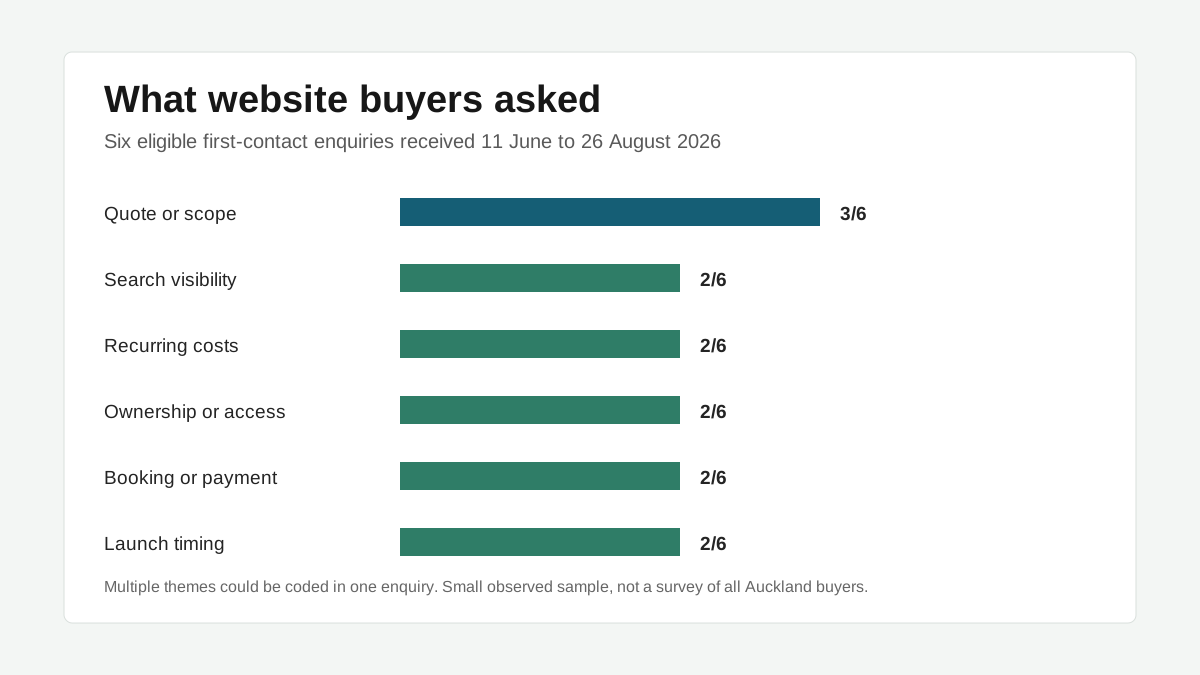
Quick finding: price and project scope appeared in three of six eligible enquiries. Search visibility, recurring costs, ownership or access, booking or payment, and launch timing each appeared in two. No buyer asked about analytics or privacy, even though both can materially affect the finished website.
This is a small analysis of genuine first-contact enquiries received by Kiwi Web Design between 11 June and 26 August 2026. It answers a narrow question: what did prospective website buyers choose to mention before a sales conversation began?
No names, businesses, email addresses, phone numbers, message IDs, tracking data or direct quotations are reproduced here.
Method
We included six first-contact website enquiries submitted through KWD forms during the stated period. We excluded tests, supplier approaches, job applications, existing-client support and later replies in a sales thread.
The unit of analysis was one proposed website project. A project could receive more than one theme. The initial messages were coded twice against the fixed definitions below, with ambiguous phrases counted only when the buyer’s intent was clear.
| Theme | Count | Coding rule |
|---|---|---|
| Quote or project scope | 3 of 6 | Asked for a quotation, price or specified deliverables |
| Search visibility | 2 of 6 | Explicitly wanted to be found or rank in Google |
| Ongoing costs | 2 of 6 | Asked about hosting, maintenance, subscriptions or post-launch fees |
| Ownership or access | 2 of 6 | Asked for control, administrator access or portability |
| Booking or payment | 2 of 6 | Needed consultation booking, calendar sync, digital products or online payment |
| Launch timing | 2 of 6 | Asked for a completion estimate or described urgency |
| Self-editing | 1 of 6 | Asked whether basic changes could be made without the provider |
| Existing content or branding | 1 of 6 | Clarified that brand and content assets were already available |
| Tracking or analytics | 0 of 6 | No initial enquiry asked how leads would be measured |
| Privacy handling | 0 of 6 | No initial enquiry asked how form or payment data would be handled |
What the enquiries reveal
Buyers evaluate the ongoing relationship, not only the build
Two enquiries paired ownership or access with ongoing fees. That is a useful scoping lesson: hosting, licences, account ownership, handover and exit conditions should be explained together. A low build price is not transparent if the buyer cannot see the continuing obligations.
Our website platform decision log shows how those obligations change between WordPress, Shopify, booking software and a lean landing page.
”Booking” can hide several different systems
The two booking or payment enquiries described materially different jobs. One needed a way to enquire or book a consultation and potentially sell digital products. Another needed two accommodation calendars synchronised with external marketplaces plus automatic payments.
Those should not receive the same estimate. A contact form, appointment calendar, marketplace calendar sync and paid ecommerce checkout have different integrations, failure modes and support requirements.
Search visibility is part of the buying problem
Two prospective buyers explicitly linked the website project to Google visibility. That does not mean a new site will automatically rank. It means the proposal should separate:
- crawlable page structure and on-page foundations included in the build;
- Google Business Profile and local-search work;
- ongoing content, authority and technical SEO;
- paid visibility through Google Ads.
For that distinction, see how SEO helps a New Zealand small business and our evidence-led SEO versus Google Ads comparison.
Buyers rarely request measurement, so the provider must raise it
None of the six initial enquiries asked about analytics, call tracking or form attribution. That absence should not be read as lack of interest. Buyers generally describe the outcome they want, while measurement is part of the provider’s professional responsibility.
KWD’s own form QA found two attribution defects during a six-form validation on 23 July 2026 and corrected them. The lesson is simple: a form that displays a success message is not enough. Delivery and analytics must be tested separately.
Seven questions a useful proposal should answer
Based on this sample, a website proposal should state:
- What pages, content and functions are included?
- What does the client need to supply and approve?
- Who owns the domain, hosting, CMS, licences and analytics accounts?
- What one-off, monthly and annual costs can apply?
- What can the owner edit, and what training is included?
- What dependencies can move the launch date?
- How will calls, forms, bookings or purchases be tested and measured?
This is also a useful checklist when choosing a New Zealand web design agency.
Limitations
Six enquiries are not representative of all Auckland website buyers. The sample came from one provider, covered less than three months and included different industries and project sizes. Counts show what appeared in an initial written enquiry, not every concern discussed later by phone or email.
The value of the sample is specificity: these were real buying questions, coded with a declared rule and stripped of identifying details. We will update the analysis only when a larger eligible sample has been reviewed using the same method.
Need to turn your requirements into a clear scope? Contact Kiwi Web Design with the service, customer action and ownership model you need. We will tell you which details still need discovery before a fixed proposal is possible.